The Fiver That Talks Back: Small Press Treasure at Newcastle Film & Comic Con 2026
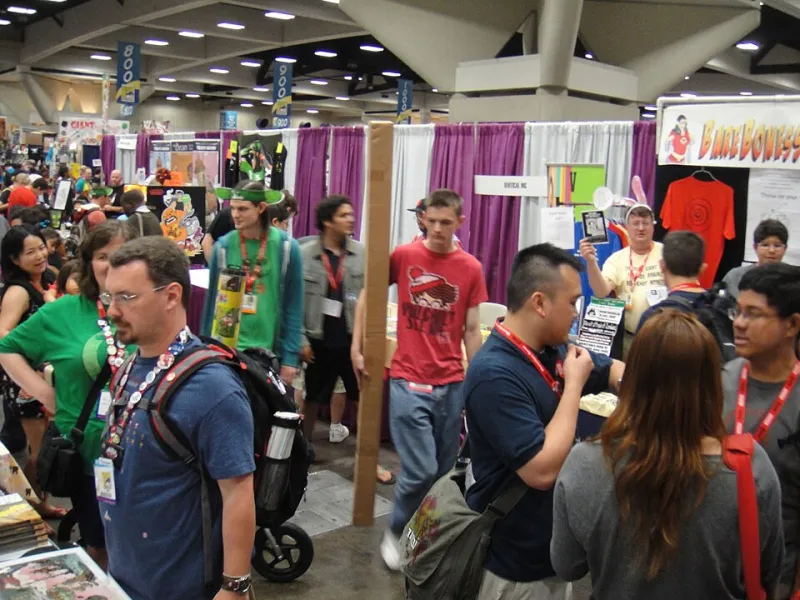
Photo: The Conmunity - Pop Culture Geek from Los Angeles, CA, USA, CC BY 2.0, via Wikimedia Commons
There is a particular sound in a dealer hall. It is the rustle of carrier bags, the clack of plastic cases, the low hum of people saying ‘I’ll come back for it.’ And then, tucked between the big stands and the queue for a photo op, there is the small press table: a folding cloth, a stack of hand-stapled comics, a jar of badges and a creator trying not to look too hopeful.
At Newcastle Film & Comic Con 2026, the small press tables are easy to walk past. They do not have giant banners or a screen looping a trailer. They have a person, a pen and a story they made themselves. That is exactly why they deserve a proper look.
Start with a slow lap
The big-ticket stalls will still be there in twenty minutes. The queue for the exclusive figure will not vanish because you took a detour. So do one lap of the dealer hall without your wallet open. Clock the small press tables. Notice the names. See which covers catch your eye. Then go back.
This is not about avoiding the big stalls — they have their place, and plenty of people save up all year for a centrepiece. It is about giving the quieter tables a second look before con-brain takes over. Small press rewards a slow browse. It is not a shelf to be scanned; it is a conversation waiting to happen.
The art of the no-pressure browse
A small press table is not a library, and it is not a museum. It is someone’s work, laid out on a cloth. The etiquette is simple: be gentle, be curious and do not treat the stock like a fidget toy.
Ask if you can have a look. Most creators will say yes before you have finished the sentence. Read the first page of a comic rather than fanning through the whole thing. Put things back where you found them. If the creator is deep in conversation with someone else, wait your turn or catch their eye with a nod. If you have had a good browse and nothing is quite right, say thanks and move on. That is not rude. That is canny.
The pressure you feel is usually in your own head. Creators are not standing there with a tally chart. They would rather have a genuine chat than a pity sale. And if you do buy, you are not just getting a comic — you are getting the story of how it got made, straight from the person who made it.
Four questions that open a better conversation
You do not need to be a comics expert to talk to a small press creator. You just need to be interested. Try these:
- ‘What’s this one about?’ — simple, open, and much better than ‘Is it any good?’
- ‘How did you make it?’ — hand-stapled? photocopied? risograph? The answer is often a mini-documentary in itself.
- ‘Is this part of a series?’ — a good way to find out if there is more to come, and whether you should sign up to a mailing list.
- ‘Where else can I find your work?’ — useful if you want to follow them after the weekend.
Ask about the process. Ask about the bit they are proud of. Ask what they are working on next. Small press creators spend a lot of time alone with their stories; a genuine question is a gift. And if you are shy, that is fine. A nod and a ‘this looks great’ is enough.
What a fiver actually buys
A fiver does not go far in a lot of places. In the Toon, it is barely a pint. At a small press table, it can buy you a mini-comic, a zine, a print, a badge or a sticker. It can buy you something hand-made, hand-numbered and slightly wonky in the best way.
That £5 comic might be photocopied and stapled at the kitchen table. It might have a typo on page three. It might be the first thing someone has ever published. It also might be the most honest thing you read all year. A £200 centrepiece is a grand thing to put on a shelf, but it does not usually talk back. A small press comic does. It has a voice, a person and a story behind it.
This is not a competition. The centrepiece and the fiver can live in the same bag. But if you are watching your spends, the small press table is where your money goes furthest in terms of story per pound.
The canny small press budget
Set yourself a small press budget before you go in. It does not need to be big. A tenner or a twenty is plenty. The trick is to buy one thing you really want rather than five things you feel obliged to pick up. If you are skint, a badge or a sticker still counts. Creators remember faces, not receipts.
And do not be afraid to say you are just browsing. ‘I’m having a look just now’ is a perfectly good sentence. You are allowed to walk away. You are allowed to come back on Sunday. You are allowed to buy nothing and still have a lovely chat. The dealer hall is not a test.
Why it matters beyond the weekend
Newcastle Film & Comic Con 2026 is a weekend, but the small press scene is a year-round thing. The person behind the table might be a local artist, a first-time zine maker or someone who has been printing comics in their spare room for a decade. Buying from them is not just a transaction. It is a bit of encouragement. It is a vote for the next issue.
The dealer hall is a high street. The small press table is the corner shop. Both belong. But the corner shop is where you find the thing you did not know you needed — the odd little story that fits in your pocket and stays with you on the Metro home.
So give the small tables a proper look this year. Slow down. Ask a question. Spend a fiver. You might leave with something that means more than the fancy figurine — and a story about the person who made it.